


Some Rather Accurate Descriptions of the Things Around Us in the Quran.
- Aug 13, 2020
- 3 min read
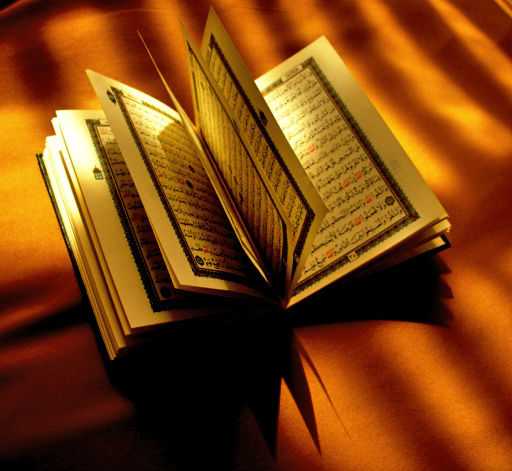
While I personally do not believe in the perfection of any religious texts, there are at least a few observable elements of truth in each one. For this post, which is the first of two posts I will be sharing about the science within major holy books, I made a list of a few selected verses from the Quran, which is the holy book of Islam, and have explained why they make sense to me in relation to the things around us and science in general. By doing so, my goal is to bridge some gaps between us who are more agnostic or atheist and those who believe, as well as show that this religious text does more than just preach about God existing. It has multiple verses that indicate that science is very compatible with it
1) Chapter 21, Verse 30: Do the unbelievers not realize that the heaven and the earth used to be one solid mass that we exploded into existence?
Chapter 51, Verse 47: We constructed the sky with our hands, and we will continue to expand it.
Both of these verses basically affirm what is known today as "The Big Bang theory". To understand more about what The Big Band theory is and what makes it most likely true, see the link below. Essentially, The Big Bang theory says that everything was all in one piece at the beginning of time, but that that one piece ultimately started breaking up into smaller peaces and is still breaking up even today. Hence, our universe is currently expanding right now and continues to do so, according to The Big Bang theory.
2) Chapter 41, Verse 12: We adorned the lowest universe with lamps (stars).
This is perhaps one of the easier things to observe as being true, though it is an accurate scientific observation nonetheless.
3) Chapter 27, Verse 88: And you see the mountains, thinking they are standing still, when in fact they are moving just like the movement of the clouds. Such is the making of God who perfected everything. He is All-Aware of what you do.
What is particularly noteworthy about this verse is that it is a known fact that our planet and the things attached to it are moving (see the link below for more details), but it is arguably difficult to notice. Consider that when the religious texts were written, people were quite a bit more limited than they are now, in terms of resources they could use to discover such things. There are some ways that one can infer that the earth is moving from observation. One example of such that I personally have observed is the way the sun sets on the horizon. However, such things take very close observation. It would probably be a very tough thing to notice for someone who was not told in advance that the earth was moving.
4) Chapter 21, Verse 30: And from water we made all living things.
It is certainly true that all living things are made primarily of water (see the link posted below). Water has long been known to be essential for keeping living things alive, but it is fairly easy to not notice that every living thing is made mainly of water, considering that living things tend to be all that wet.
5) Chapter 77, Verse 8: Thus, when the stars are put out.
This is true too. As confirmed in the link under here, stars do not exist forever. They, like so many other things in existence, break down eventually. Once again, this is something that would likely be quite challenging to observe at a time when people did not have quite the level of resources that we have today that allow us to notice things like this.
There are other verses of the Quran that are related to science and are accurate, but these ones stand out to me the most. It is great when a religious text has things in it that can be acknowledged as true and understandable to everyone, regardless of whether they are religious or not. In my experience, religion and science are often stereotyped as clashing. For instance, some say that evolution is inconsistent with there being a creator. While it might be true that we cannot scientifically prove any religion that involves anything supernatural to be true, that does not mean that secularly-based scientific observations that might or might not be alluded to in religious texts are at odds with religious texts or the existence of a creator. In the case of the religious text discussed in this post, the text itself quite clearly affirms several observable scientific truths.
Comments