


What Does the Bible Say About Intimacy?
- Jul 17, 2018
- 9 min read
Depending on which church you went to or currently go to, you may have been taught that intimacy is meant only for marriage. I wholeheartedly respect people making their own choices to live by that. However, it is still good to examine the text and history of The Bible with an open mind so that once does has as many facts as possible before reaching a final conclusion on what the text says and the meaning behind it. This is not to change minds. Rather, my goal in this article is to share my own opinion on what The Bible says about intimacy, based on my own research of the topic. This is a topic I have been researching for several years and is one that I have been wanting to articulate my findings on publicly for about a year or so now.
The first topic I want to discuss is intimacy outside of marriage. One thing about marriage that is worth noting is that marriage as a government-sanctioned union is a relatively recent phenomenon. As can be seen in the link below, marriages in Western countries were originally arrangements made by the families of whichever couple was getting married, and early churches accepted it when couples would tell them that they had taken marriage vows. No other witnesses aside from the families and the couples were needed. Since so many marriages these days are done through legal contracts rather than family/church contracts, I think it is entirely possible to support the rights of people of the same gender to get married to each other in a legal sense, even if one does not see it as a valid type of marriage from a religious point of view. At the same, I am completely in favor of allowing churches and other non-profit organizations to bless whichever unions they want to, so long as those unions are between willing adults.
https://www.livescience.com/37777-history-of-marriage.html
With regards to what The Bible itself says about intimacy outside of marriage, it does not say very much. The Ten Commandments and many other parts of The Bible say not to commit adultery. However, adultery means that at least one of the two people involved in the act is already married to somebody else. It is not about premarital intimacy. The closest the Bible comes to condemning premarital intimacy is in various parts of the New Testament. Below I have listed some of the verses that are commonly used against premarital intimacy and then an explanation of why I think that view of those verses is not quite right. These verses vary as far as wording goes depending on which English translation one is using. In this case, I am using the New Revised Standard Version.
Do you not know that wrongdoers will not inherit the kingdom of God? Do not be deceived! Fornicators, idolaters, adulterers, male prostitutes, sodomites, thieves, the greedy, drunkards, revilers, robbers—none of these will inherit the kingdom of God. (1 Corinthians 6:9-10)
"Now concerning the matters about which you wrote: “It is well for a man not to touch a woman.” But because of cases of sexual immorality, each man should have his own wife and each woman her own husband. (1 Corinthians 7:1-2)
Let marriage be held in honor by all, and let the marriage bed be kept undefiled; for God will judge fornicators and adulterers. (Hebrews 13:4)
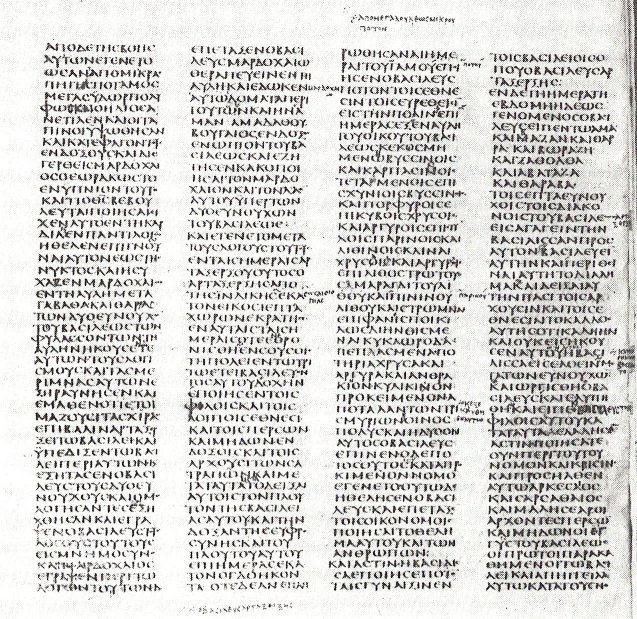
The issue with the verses above and a number of other verses found in the New Testament is with the terms "sexual immorality" "fornication" and "woman". The terms "sexual immorality" and "fornication" are translations of the Greek word "porneía" from the original Greek text of the verses. The oldest-known Bible is in Greek and is called the "Codex Sinaiticus" and the word "porneía" is used in the majority of the verses some Christians of today often use against premarital intimacy. The actual meaning of that word is "prostitution". Below are some links that explain that in more detail. A literal interpretation of the text would be that prostitution alone is being condemned, but a careful reading of both the surrounding text in the Bible and the historical context in which the Bible was written shows that the prostitution being condemned here is most likely specifically temple/shrine prostitution. First off, a lot of these verses from the Bible are found in sections that are more broadly about idol worship and things like that. Second, fertility gods and goddesses in Greece and Rome, such as Aphrodite, were worshipped through prostitution. For more information on Aphrodite, a Greek fertility goddess, I have posted a third link below. That link though contains an explicit picture of a statue, in case any readers would rather not see that. Based on this information, my view is that what the Bible condemns with regard to extramarital intimacy are adultery and prostitution, most likely specifically the prostitution that was committed in Greece and Rome in the context of idol worship of Pagan gods and goddesses. Even so, some might still say something like "Yeah, well how about the verse that says "'Now concerning the matters about which you wrote: “It is well for a man not to touch a woman.' But because of cases of sexual immorality, each man should have his own wife and each woman her own husband"? That is one of the parts where the issue of the word "woman" comes up. The Greek word in that verse and many other verse in the Bible that that word woman is translated from is "gynaíka", which can either mean "woman" or "wife", depending on the context. In Biblical times, premarital intimacy itself was not an issue. As most are probably aware, Jesus was Jewish, so the rules from The Torah are the basis for his teachings, and extramarital intimacy in The Torah is basically only forbidden if the woman is married, as shown in the fourth link below. Given that, it is very likely that the word "gynaíka" means "wife" in the context of that verse rather that the more generic word "woman".
https://www.ancient.eu/article/28/prostitution-in-ancient-athens/
http://digitalcommons.macalester.edu/cgi/viewcontent.cgi?article=1007&context=classicsjournal
https://greekgodsandgoddesses.net/goddesses/aphrodite/
https://www.myjewishlearning.com/article/jewish-views-on-premarital-sex/
The other thing I want to discuss here is the topic of homosexuality. Again, the Bible does not have much to say on that topic. At most, one can probably say that the Bible speaks against certain types of homosexual actions, though not necessarily homosexuality in general. Below are some of the verses that are used most often against homosexuality, followed by the reasons I think that that is not necessarily the correct interpretation of those verses. Again, this is using the New Revised Standard Version.
You shall not lie with a male as with a woman; it is an abomination. (Leviticus 18:22)
If a man lies with a male as with a woman, both of them have committed an abomination; they shall be put to death; their blood is upon them. (Leviticus 20:13)
Do you not know that wrongdoers will not inherit the kingdom of God? Do not be deceived! Fornicators, idolaters, adulterers, male prostitutes, sodomites, thieves, the greedy, drunkards, revilers, robbers—none of these will inherit the kingdom of God. (1 Corinthians 6:9-10)
Now we know that the law is good, if one uses it legitimately. This means understanding that the law is laid down not for the innocent but for the lawless and disobedient, for the godless and sinful, for the unholy and profane, for those who kill their father or mother, for murderers, fornicators, sodomites, slave traders, liars, perjurers, and whatever else is contrary to the sound teaching that conforms to the glorious gospel of the blessed God, which he entrusted to me. (1 Timothy 8-11)
The confusion with these verses is in the terms "male prostitutes" and "sodomites". Some translations even replace those with words such as "effeminate" and "homosexuals". The two Greek words from the original text that those are translated from are "malakoí" and "arsenokoítai". The literal meaning of the word "malakoí" is "soft", though most modern translations translate the word as "effeminate" or "male prostitutes". Unfortunately, it is not completely clear what that word is referring to. It could be a reference to the male eunuchs from Greece and Rome who were castrated. For example, eunuchs in Ancient Rome (also known as "Galli") were priests who were castrated in order to serve their goddess Cybele. More information on them can be found in the first link below. "Soft" could also be referring to those who are spiritually weak. For instance, the Luther Bible, as shown in the second link below, used the German word "Weichlinge" in place of "soft". In English, "Weichlinge" basically has multiple meanings, most commonly "weaklings", "wimps" and that sort of thing. Personally, I think the word "soft" is referring to eunuchs in this context, but it most certainly could also just be referring to those to weak people , particularly those that are spiritually weak. The other word in question, "arsenokoítai" is a rarely-used Greek word, probably coined by the Apostle Paul himself. The literal meaning of the word is "male beds", though again, there are a few possible things that could be referring to. Unfortunately, that word is only used twice in the Bible without much context, and is very rare in Greek literature. That word is found in 1 Corinthians 6:9 and 1 Timothy 8-11. It is very likely to me to be a word Paul coined from the Old Testament from both Leviticus 18:22 and the first part of Leviticus 20:13, both of which say basically the same thing and use the Greek words "ársenos" and "koítin". Leviticus 18:22 reads in the Greek text as "kaí metá ársenos ou koimithísi koítin gynaikós: vdélygma gár estin," and the first part of Leviticus 20:13 reads in the Greek text as "kaí ós án koimithí metá ársenos koítin gynaikós, vdélygma epoíisan amfóteroi:" Most likely, Paul coined the word "arsenokoítai" by combining the words "ársenos" (man) and "koítin"(bed/bedding). Both the Greek and the Hebrew texts of those verses basically say that if man lies with man in a woman's bed, both of them concocted an abomination, which to me gives those verses a fairly different meaning than what most current translations translate them as saying. Given that Paul likely coined "arsenokoítai" from those two verses, I think it is best to determine the meaning of that word by looking at the meaning of those verses. I am pretty sure that the meaning of those verses is that it is unclean for men to be intimate with each other in a bed that a woman sleeps in. Indeed, there are other rules in Leviticus that give guidelines for what men and women are to do in each others' beds. In particular, Leviticus 15:19-24 says "When a woman has a discharge of blood that is her regular discharge from her body, she shall be in her impurity for seven days, and whoever touches her shall be unclean until the evening. Everything upon which she lies during her impurity shall be unclean; everything also upon which she sits shall be unclean. Whoever touches her bed shall wash his clothes, and bathe in water, and be unclean until the evening. Whoever touches anything upon which she sits shall wash his clothes, and bathe in water, and be unclean until the evening; whether it is the bed or anything upon which she sits, when he touches it he shall be unclean until the evening. If any man lies with her, and her impurity falls on him, he shall be unclean seven days; and every bed on which he lies shall be unclean." Therefore, "arsenokoítai" (male beds) is very likely referring to men who are intimate with each other (usually pederastic relationships between grown men and adolescent males) while in the bed of a woman rather than intimacy between men in general. This was a fairly common practice in Greco-Roman cultures, and it was most often a grown man and a teenage boy. There are depictions of this historical practice, such as the ones in the third and fourth links below. Again, these pictures are somewhat explicit, in case any readers do not want to see that. This all said, it is also possible that these two Leviticus verses that "arsenokoítai" was most likely coined from are somehow metaphoric for men prostituting themselves as part of worship of the Canaanite god Moloch, since Leviticus 18:21 says "You shall not give any of your offspring to sacrifice them[a] to Molech, and so profane the name of your God: I am the Lord." To me, the most likely meaning is the first meaning I gave, though it could very well be referring somehow to the latter. For further reference to the original Greek text, check the fifth and sixth links below.
http://www.glbtqarchive.com/ssh/galli_S.pdf
https://www.biblestudytools.com/lut/1-korinther/6.html
https://en.wikipedia.org/wiki/Pederasty_in_ancient_Greece#/media/File:WallPaintingTomb_Paestum_Italy_GreekColony_sm.jpg
https://en.wikipedia.org/wiki/Pederasty_in_ancient_Greece#/media/File:Hyakinthos.jpg
https://www.academic-bible.com/en/online-bibles/novum-testamentum-graece-na-28/read-the-bible-text/
https://www.academic-bible.com/en/online-bibles/septuagint-lxx/read-the-bible-text/
The truth is, nobody really knows for sure what the proper interpretation of the Bible is on these issues. The best we can do is examine the original texts and the historical context in which they were written. This can be done through debate, speaking with scholars, examining and translating the original text as best as we can, researching history, and so on. I am strongly opposed to calling myself a know-it-all on this subject or any other subject for that matter. For me, dogmatic belief one way or another is not the way to go. In my experience, the best way to go about this type of thing is be patient and most importantly, open-minded. We do not all have to agree with each other on what the Bible does and does not say. The goal is to have civil and educated discussions on these topics and hopefully reach our own conclusions based on the evidence that we have, aside from what is preached at church.
Comments